Destination
Tulum
Where the jungle decides how you build.
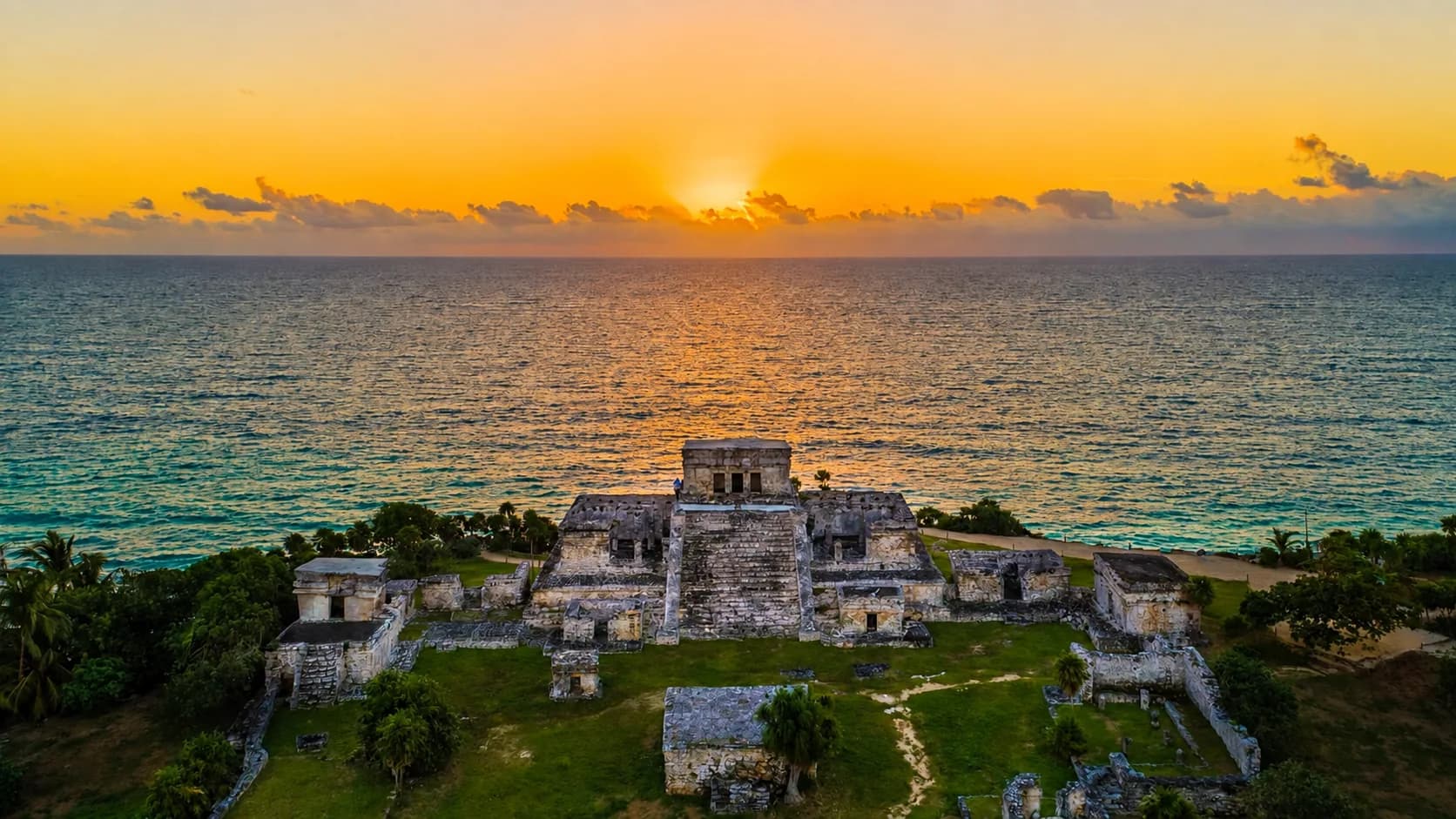
Tulum cannot be understood from a site plan. It is a place where vegetation set the rules before urbanism did, and where architecture learned to answer to it. That relationship — not the beach — is what defines its value, and what explains why it drew a kind of buyer other Caribbean destinations never attracted.
Lifestyle
A community that defined an aesthetic of its own.
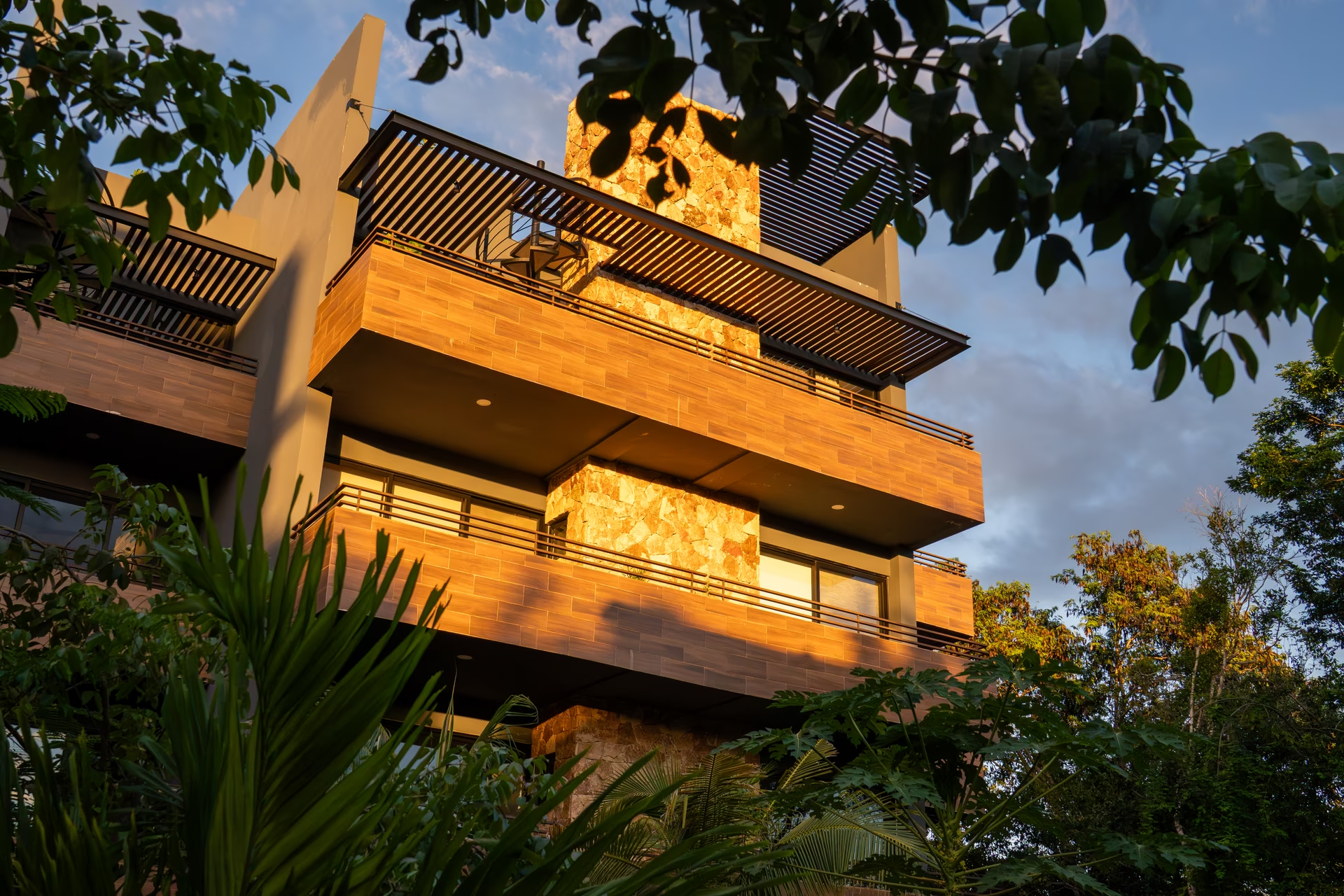
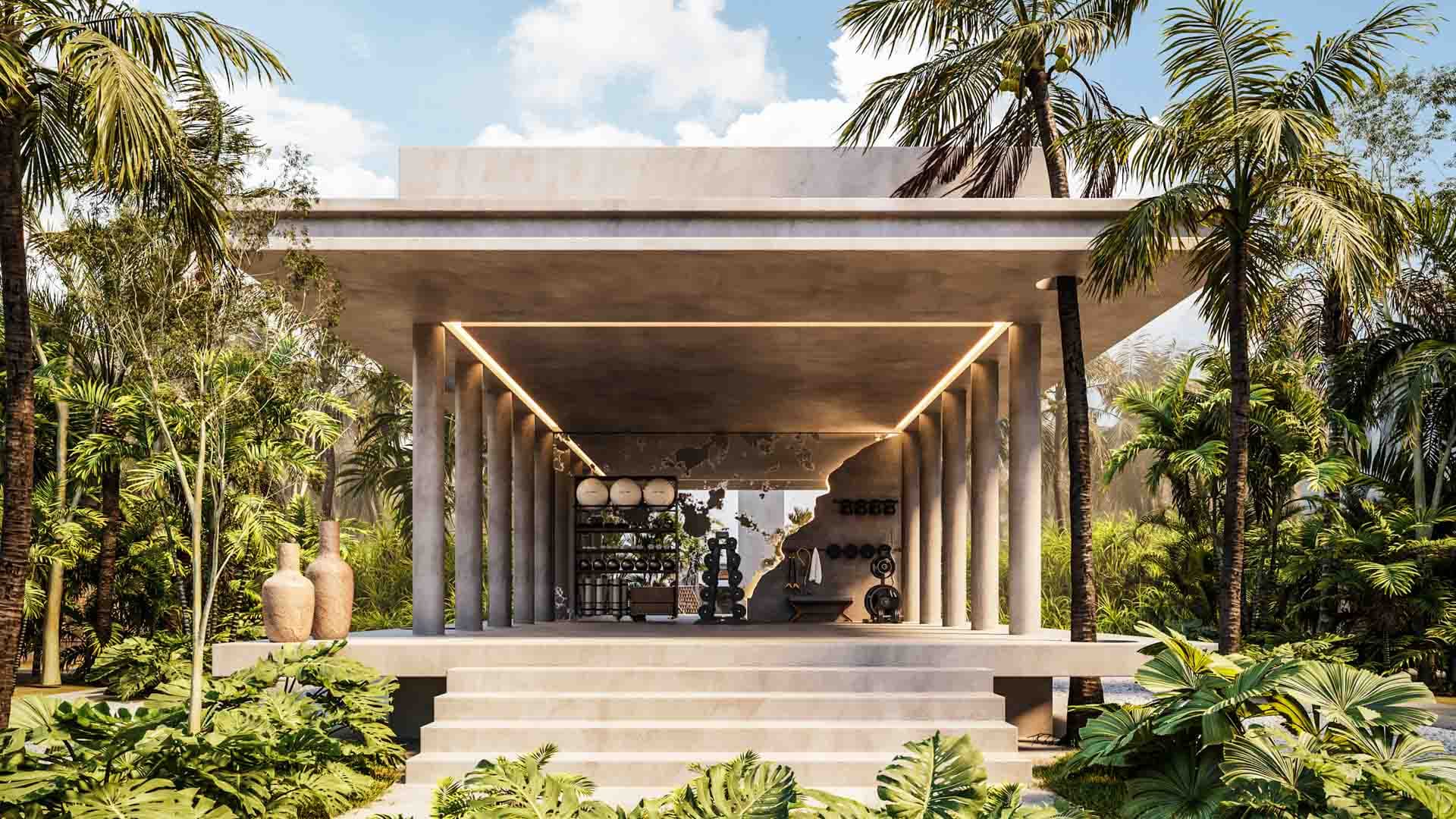
Tulum built a recognizable identity: natural materials, filtered light, open volumes and a life that happens outdoors. Hotels, restaurants and residences share a single language. That visual coherence is an asset — it is what makes the destination recognizable in a single photograph.
Architecture
Design that answers to its setting.
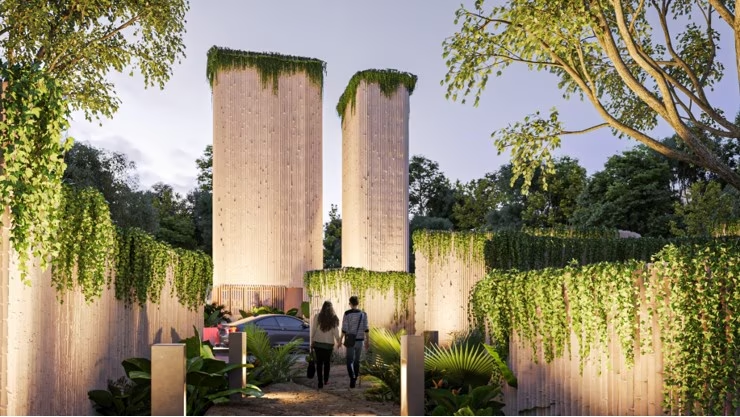
Building in Tulum means working with real constraints: limited densities, vegetation that must be preserved, cenotes that shape the land. The projects that succeed are the ones that turn those limits into a design argument rather than ignoring them.
Beaches
Coast, lagoon and cenote.
Tulum’s coastline runs from the hotel zone up to Tankah and Soliman, with markedly different profiles along the way. Inland, the cenote and lagoon system offers another way to be in the water. Distance to the sea stops being the only criterion: which sea, and through which access, matters more.
Dining
A scene that brought international attention.
Tulum’s culinary offering went from supporting tourism to becoming a reason to travel. That scene sustains demand outside high season and gives life to the areas where it concentrates.
Wellness
What holds up the low season.
Retreats, yoga practice, integrative medicine and wellness travel operate year-round and with long stays. For a rental property, that guest profile changes the numbers entirely compared with weekend tourism.
Investment
A market that has begun to differentiate.
Tulum is no longer a single market. Location, build quality, rental operator and the legal structure of the land now separate projects that looked equivalent a few years ago. Choosing well demands local information — which zone, who is building, under what permits, and for which kind of guest.
Tulum
Zones
Tulum is not one market. Each zone has its own buyer profile, its own pace of consolidation and its own rental logic.
Aldea Zamá
The most consolidated zone: urbanized, serviced and close to the beach. Mature product, established demand.
Selva Zamá
The natural continuation of Aldea Zamá, with larger lots and more preserved vegetation.
La Veleta
The zone with the most new construction and the most accessible entry prices. Consolidation underway.
Región 15
Close to downtown, with recent growth and a mixed residence-and-rental profile.
Bahía Tankah
To the north, beachfront and low density. Scarce product at a high ticket.
Hotel Zone
The historic coastal strip. Very limited inventory and specific regulation.
Tulum Country Club
Master-planned community with a golf course, oriented to long-term residence.
Looking to invest here?
Tell us what you are looking for and a local specialist will reach out.